Heddles and the two sheds
An inkle loom carries no harness, no shafts, no mechanisms. Its whole pattern-holding system is a row of short string loops — heddles — and what they do determines whether your band comes off the loom straight. The inkle guide's heddle section is the one to read twice; this is the why of it.
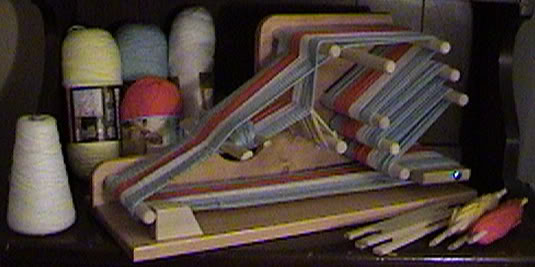
Half the threads, two sheds
Heddles are short loops that hold every other warp thread. On the loom, that division makes two sheds — the heddled threads move one way when you change the shed, the open (un-heddled) threads sit in the other. You work between those two positions, passing the weft and beating. The guide's counting rule: roughly half as many heddles as warp threads, with every heddle tied to the same length — because one loose loop tilts the shed, and a tilted shed narrows the band you worked for hours.
The order is the project
In warp-faced bands the weft hides inside the structure and the warp threads carry the whole design — which makes two orders the craft itself: which color goes through which heddle, and in which sequence the whole run is threaded. The app generates the full threading draft from a pattern so the shed logic reads correct before the first knot; the printed chart orders thread by thread, heddle or free.
The threads that stay free
The open threads are pattern country. In Baltic pickup — the letters-and-figures style — extra pattern threads join the warp without heddles at all, and on pattern rows you pick them up or drop them by hand against the chart while the plain sheds weave underneath. The heddled pair runs the ground; your hands draw the picture on top of it. The guide's starting band is exactly that project: a 21-thread pickup spot band with the threading order printed in the key, free on the charts page.
Tie the loops equal, thread the order, and cut some string this week. — the bench crew

